Away from the “classic” canyoning hotspots of the Pyrenees, Chistau hides a handful of alpine canyons that feel like true hidden gems for anyone passionate about the sport.
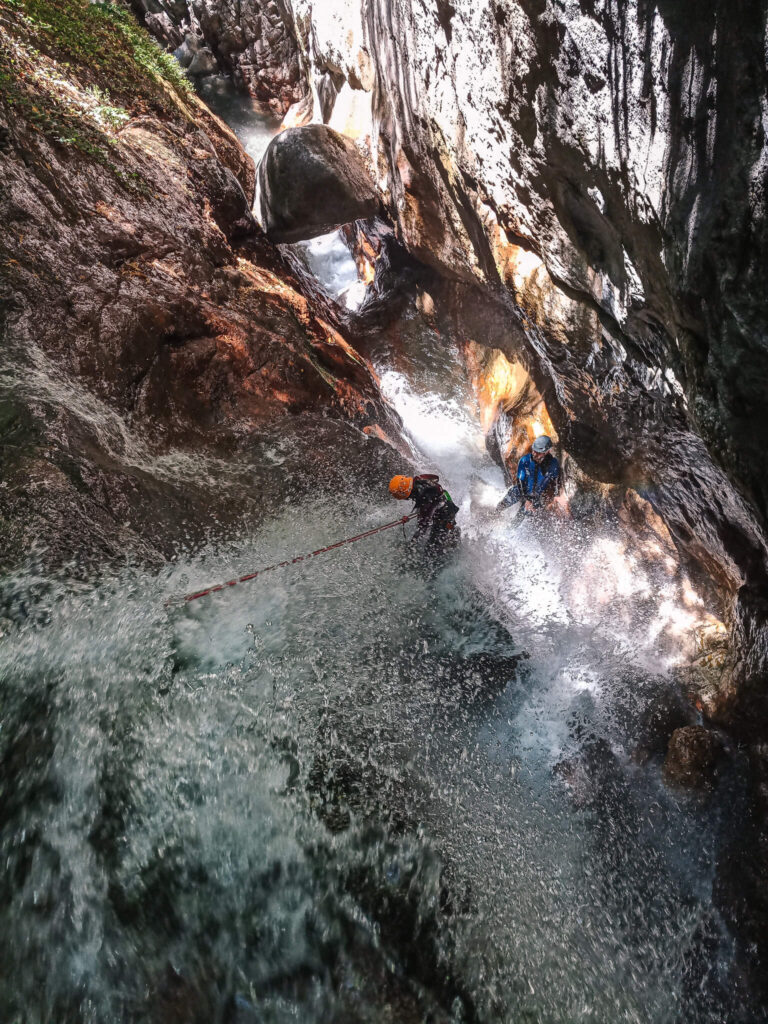
The Barranco del Sen (pictured) is one of them: a short approach leading to around three hours of rappels and wild scenery.
The Gallinés Canyonnear Saravillo, is reserved for those who love exposure and vertical terrain, ending with a spectacular 100-metre rappel split into three sections, crossing above the tunnels of La Enclusa.
For experienced white-water canyoners, the Sallena Canyon is one of the most iconic canyons in the Pyrenees and requires a high level of technical skills and experience.
Further south, within the municipality of Tella-Sin, lies the beautiful — and better known — Miraval Gorge, divided into two fun sections: The Upper and Lower Miraval canyons.
Both are aquatic canyons filled with jumps into turquoise pools, although the upper section is more physical and technical, while the lower canyon offers a perfect family-friendly adventure.
Please remember that canyoning is an activity with inherent risks. If you don’t have previous experience, hiring a certified guide is essential. You can contact ASDON Aventura to book your experience.
The crag of Revilla, near Tella, offers routes ranging from grade IV up to 8th grade. It’s a great winter crag, with sunshine until around 4pm.
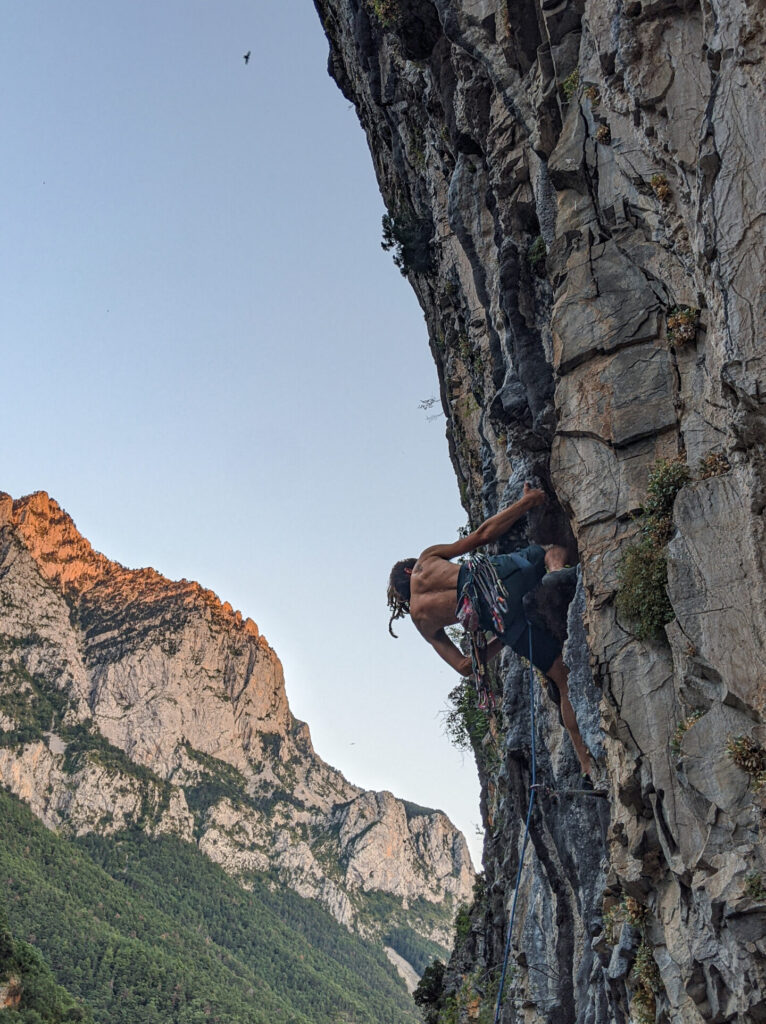
In the Devotas Gorge you’ll find the sectors of Devotas and Superdevotashome to routes starting at 6th grade and featuring plenty of 7th and 8th grade climbing respectively. The climbing here is characterised by tufas and it`s only suitable in summer, as the walls remain wet during winter.
Rincón de Sinjust before the Devotas Gorge, is another excellent summer climbing crag. Expect high-quality limestone and routes beginning around 6b, with many climbs in the 7th grade range.
Peña Artiés: Beside the tunnels leading into Chistau rises a huge wall over 400 metres high: Peña Artiés — often incorrectly referred to by climbers as “Peña de Sin”. These are serious routes where protection gear is essential. Climbing here demands strong technique, careful route-reading and a genuine taste for adventure.
Pared de los Carboncillos (Santa Isabel Pass)
Recently developed semi-equipped routes on limestone scattered with curious fossilised sea sponges known locally as “carboncillos”.
Grades start around 6b. East-facing, the wall is ideal for cold spring mornings or hot summer afternoons.
The Cotiella Massif and Lafortunada Wall also offer several interesting options for traditional and alpine-style climbing.
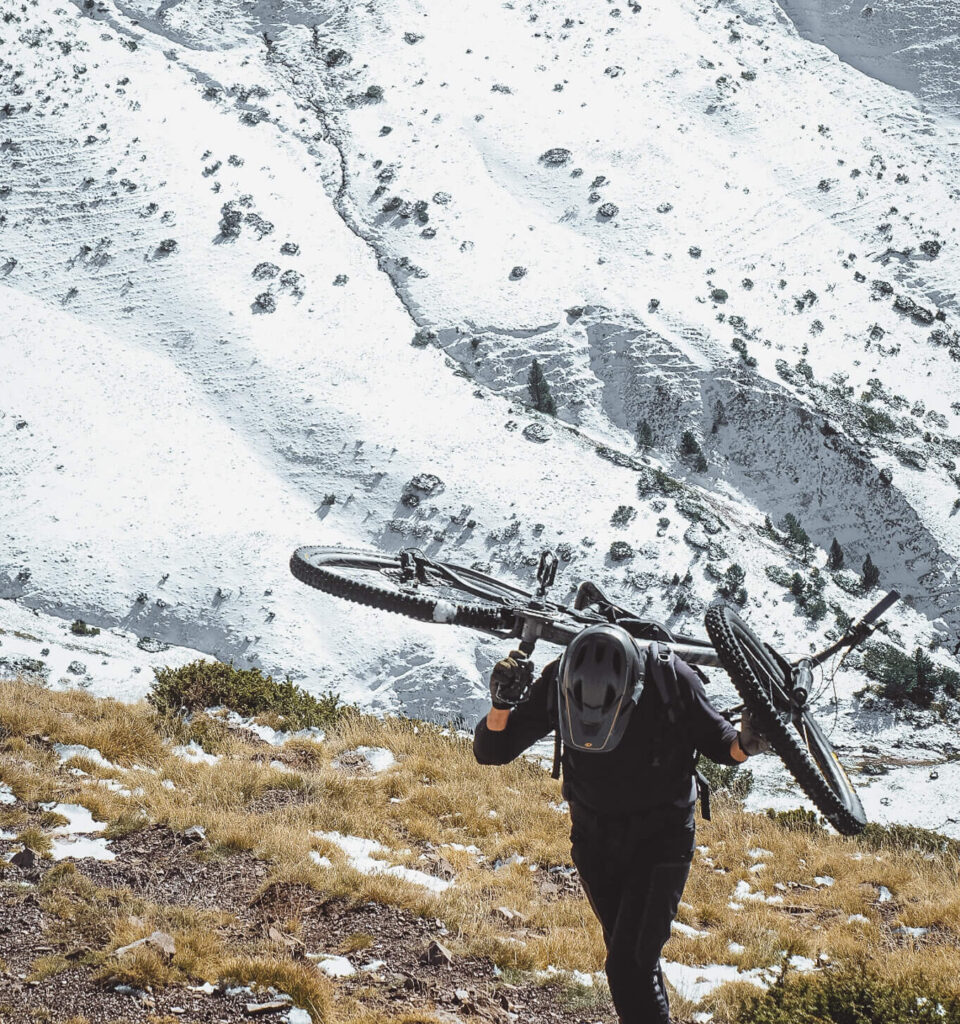
With its wild alpine character, Chistau is a privileged destination for alpine mountain biking,especially for riders with solid experience in this kind of terrain.
Most routes involve significant elevation gain, and the trails are generally unmarked, so careful planning is essential. Finding GPS tracks, studying maps and preparing properly all form part of the adventure here.
Beyond the classic ride to the Basa de la Mora, the valley’s main rideable alpine terrain — often involving long hike-a-bike sections — is concentrated around the Cruz de Guardia, Punta Suelza-La Madera Pass.
For gravel or XC riding, , all of the valley’s forest tracks are suitable for mountain bikes. However, it’s worth bearing in mind that the access dirt roads to the Sahún/Chía pass, the Viadós Refuge and especially Basa de la Mora become quite busy with motor vehicles during summer, which can make riding less enjoyable and, at times, potentially dangerous.
If you’re looking for something quieter, the dirt roads above San Chuan or the route linking Chistén with the La Comuna Valley are both excellent alternatives — equally beautiful and perhaps a little less demanding in terms of elevation gain.
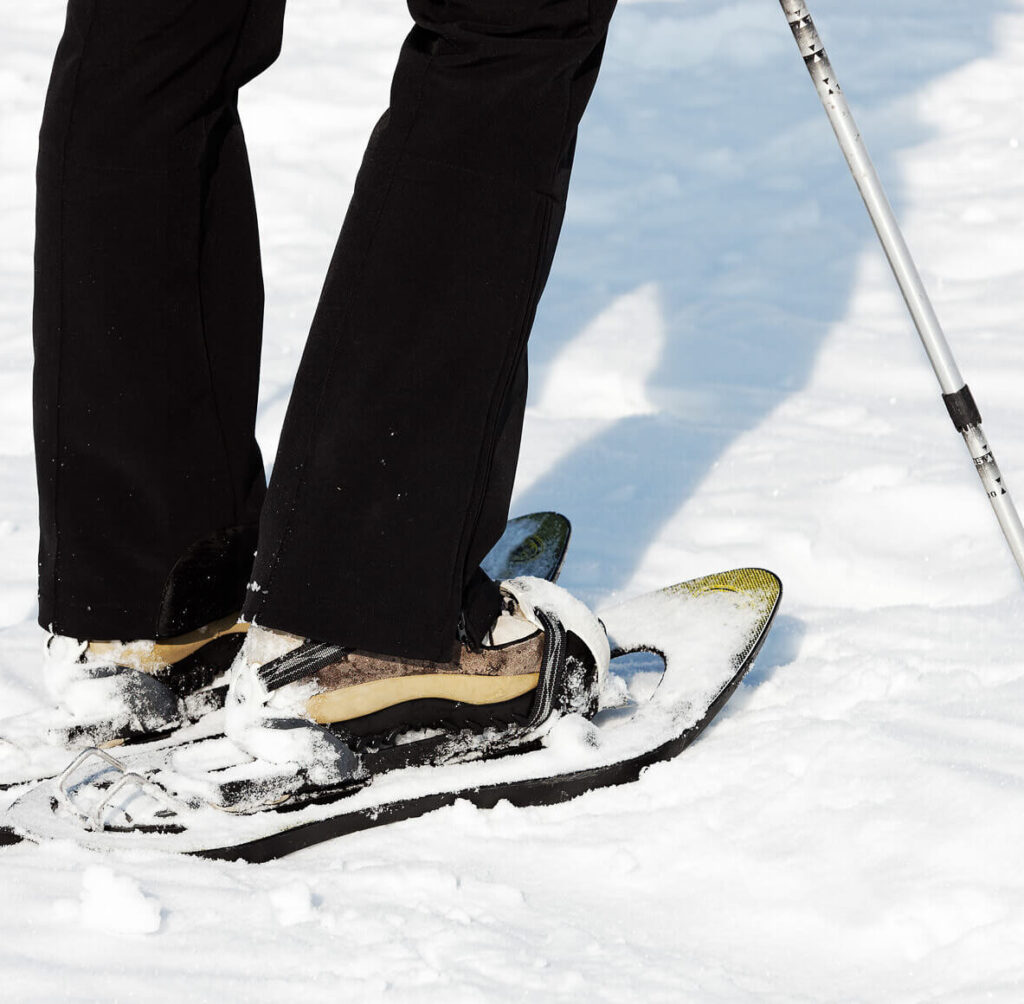
When winter covers the valley in snow, snowshoeing becomes one of the most magical ways to discover Chistau. You don’t need to be an expert — just a willingness to walk, warm clothing and the desire to let the winter mountains work their magic.
Routes for all levels: In Chistau you’ll find everything from gentle introductory walks to half-day routes that are perfect for families.
Recommended areas:
Tabernés–Viadós One of the valley’s classic starting points for snowshoe routes.
The Cinqueta riverside and La Poma area Ideal for easier and more accessible outings.
Routes towards places such as Cruz de Guardia or Fubillons offer wider views and a little more elevation for those looking for a bigger adventure.
ASDON Aventura also offers guided snowshoe excursions and snowshoe rental in Chistau — ideal if you don’t know the area well or simply want to enjoy the experience without worrying about logistics.
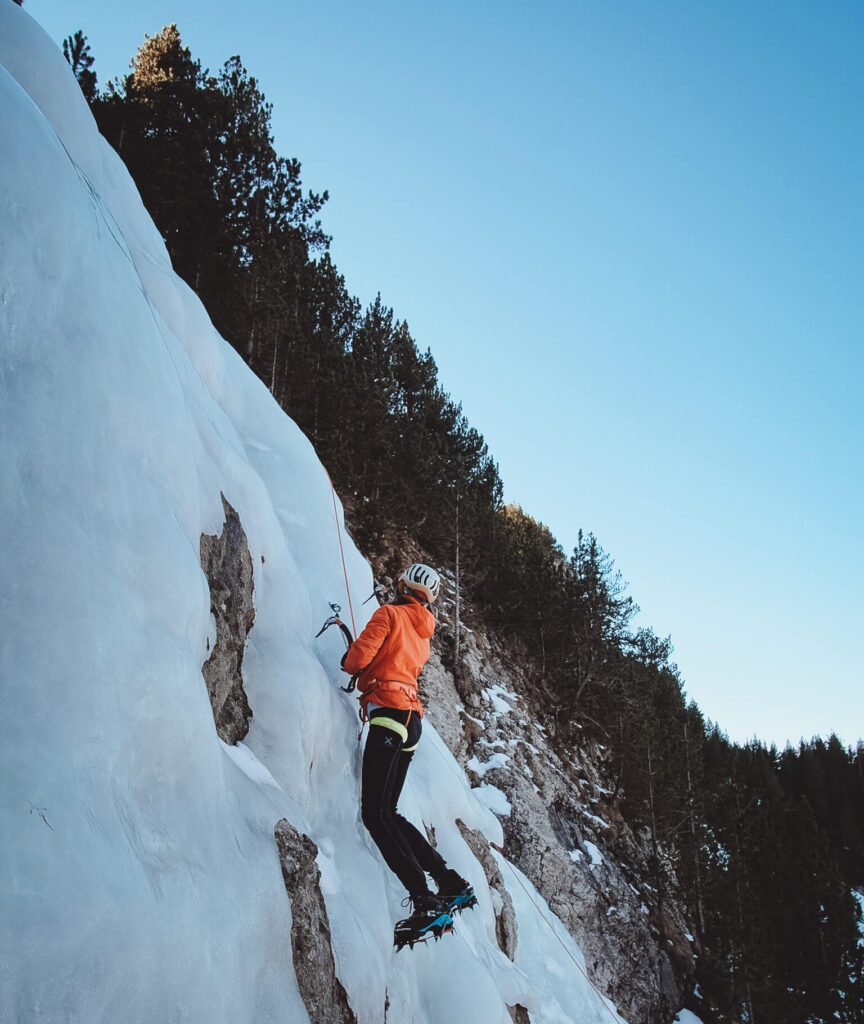
Less famous for mountaineering than the neighbouring Bielsa Valley, Chistau still hides a remarkable collection of routes for those drawn to ice, snow and wild alpine terrain.
Below the north faces of Peña de las Diez and Peña de las Once , several beautiful icefalls form for just a few days each winter, offering short-lived but unforgettable climbing. Depending on snow conditions along the Chía dirt road and the line you choose, approaches can range from 45 minutes to more than two hours.
Even more remote is the Mobisón icefall, tucked away beneath its north face. Its altitude — above 2,600 metres — and long approach usually guarantee quiet conditions and excellent ice quality.
Also within the Cotiella Massif lies the Fuenfría area, a true playground for experienced alpinists. Here you’ll find La Graciela , considered the hardest ice and mixed route in Spain, waiting for those bold enough to take it on.
More accessible are the Raymond d’Espouy and Central couloirs on Peña de la Una, both located near Basa de la Mora. The setting alone makes them unforgettable.
At Posets/Lardana massif, possibilities multiply, especially later in spring. The Jean Arlaud Couloir on Posets is one of the area’s classic mountaineering routes — the kind of climb every alpinist wants to add to the list.
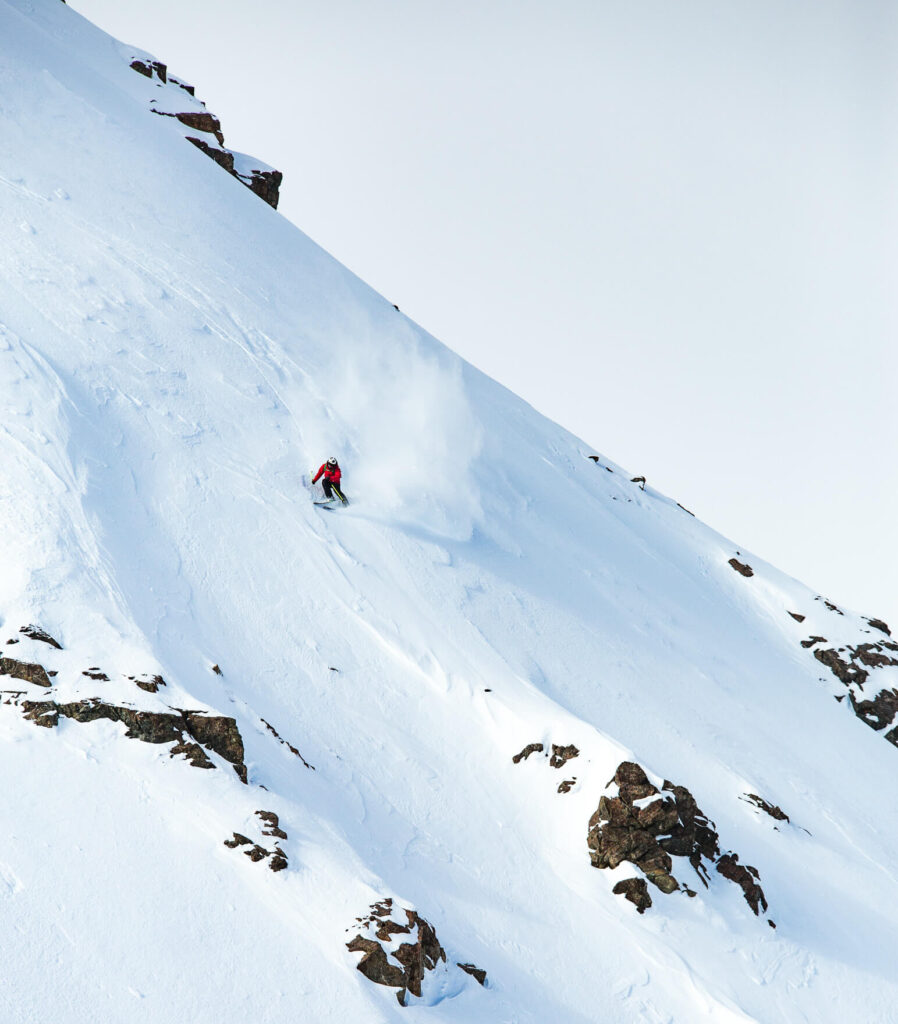
The slopes of Punta Suelza, home to areas such as Fubillons and La Poma, offer some of the best accessible ski touring in the valley, with relatively easy access via forest track. It’s best to leave the car at the Cruz del Puyadase viewpoint, as the road beyond is often icy.
For something more demanding, head towards the mysterious Cotiella MassifCotiella Massif. The circular route linking the magical Agujas de Lavasar with the Ibón de Plan — also known as Basa de la Mora — offers some of the valley’s finest ski touring scenery and descents.
If you’re looking for a multi-day ski touring adventure Posets-Maladeta Natural Park , the Posets-Maladeta Natural Park is hard to beat.
Reserved for experienced skiers capable of carefully planning their routes, its mountain huts and unguarded refuges provide shelter at the end of each day.
As with every mountain activity — and especially when using these huts — we ask for the utmost respect: leave everything exactly as you found it and, if possible, leave a little extra firewood behind for the next person.