loaderimg

Lafortunada and Badaín

Beneath the slopes of Punta Lierga.

You are here

Lafortunada is today the main village of the Tella-Sin municipality.

The two great long-distance hiking routes that cross Sobrarbe — the GR-15 and GR-19 — both pass through this village, which is crossed by the A-138 road and grew at the beginning of the 20th century following the construction of the hydroelectric power station that still operates today.

On a hill beneath the slopes of Punta Llerga lies Badaín, a small village with beautiful examples of traditional Pyrenean architecture. Among them stands the Church of Santa María, built in the 16th century atop an earlier Romanesque structure.

Churro de Fornos

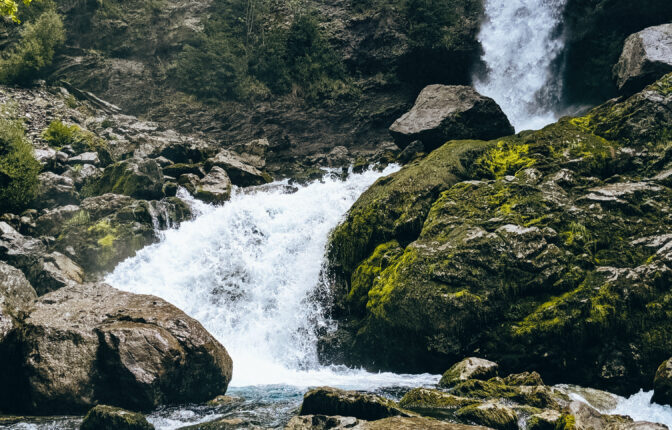
El Churro de Fornos The Cotiella massif rises like an almost impregnable fortress from every side. A handful of deep gorges — such as the Irúes River canyon — provide access into its interior while also revealing the complexity of its geological structure. This beautiful walking route leads to the remarkable Fuente de Fornos, where several powerful springs emerge directly from the rock year-round to feed the Irúes River. It’s a reminder that beyond its dramatic cliffs and summits, the Cotiella massif also hides a fascinating underground world. You can learn more about the area’s geology through the self-guided Geoparque Sobrarbe-Pirineos.

Don’t miss…

A village powered by history

At the Lafortunada Hydroelectric Power Station, you can visit the Pyrenean Electricity Museum — a fascinating cultural space exploring the impact of hydroelectric engineering on mountain landscapes and communities. 

The Devotas Gorge

History and legend intertwine around this spectacular gorge, now crossed by the road leading to Bielsa. According to local tradition, the nuns from the old monastery of Badaín were the ones who first opened this route across the cliffs, crossing it in the time it took to pray a rosary.

The Church of Badaín

Its origins lie in an ancient Benedictine monastery surrounded by centuries of tradition and devotion.
Over time, it evolved from monastery to hermitage and eventually became a parish church.
The present building combines its 12th-century Romanesque foundations with a major 16th-century expansion.